
Why Living Walls Belong in Educational Spaces
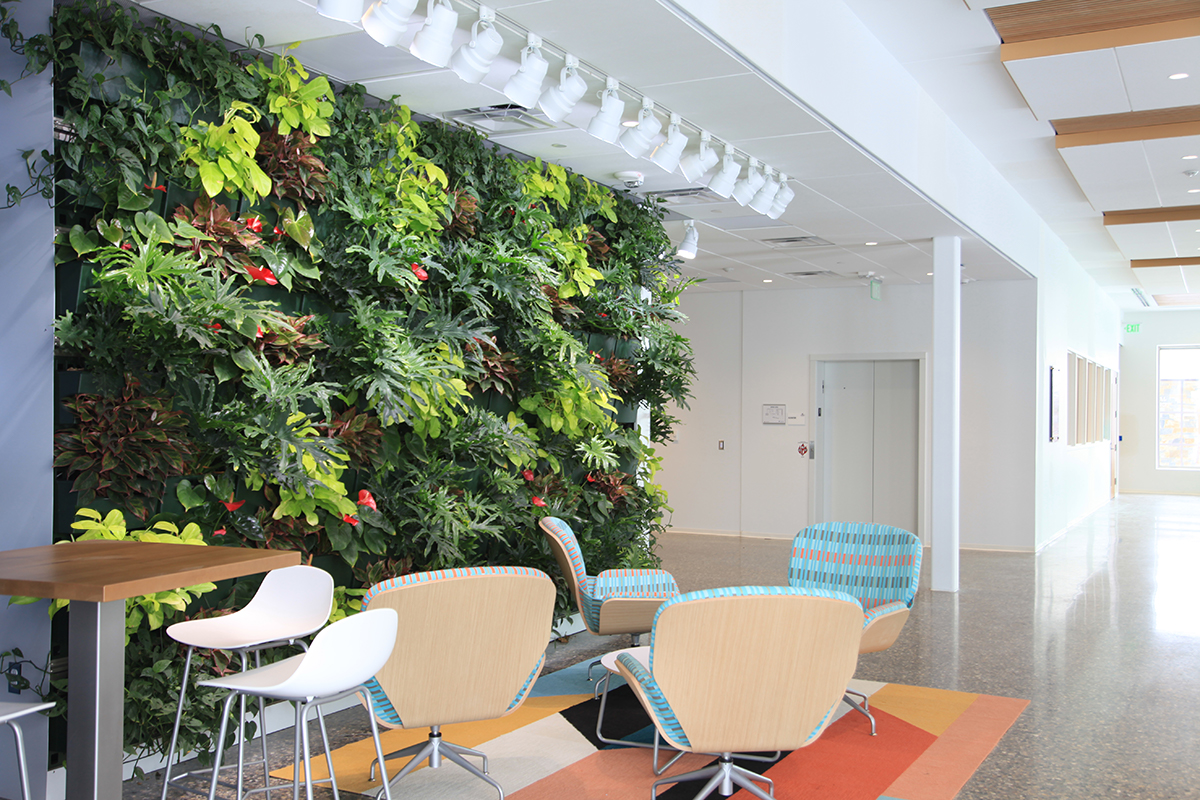
Living walls, green walls, or vertical gardens are more than an attractive design feature. In schools, colleges, and learning centers, they actively support student success, student and staff wellbeing, and the overall learning environment. By integrating nature into built spaces, educational facilities can create healthier, more engaging, and more inspiring places to learn.
Supporting Learning and Academic Performance
Research consistently shows that exposure to nature benefits students academically. LiveWall® brings that connection indoors, where students spend most of their time. Studies have linked access to greenery with higher performance in subjects like math and English, improved concentration, and reduced symptoms of attention-related challenges such as ADHD.
Living walls also offer hands-on learning opportunities. When students are involved in planting or maintenance, they gain a deeper understanding of environmental stewardship, plant biology, air quality, and food systems—turning the wall itself into an educational tool.
Oklahoma State University’s Landscape Services designed and installed a 20-foot wide by 8-foot-tall vegetative LiveWall® on the east outdoor patio of its Agricultural Hall. It includes more than 200 plants used for learning and research.

Oklahoma State University Agricultural students utilize a 20-foot by 8-foot LiveWall® to learn and research plants on campus.
Improving Focus, Productivity, and Attendance
Educational environments that incorporate biophilic design elements tend to see better attendance, greater contentment, and improved staff retention. Living walls help reduce mental fatigue, eye strain, and distractions, making it easier for students and educators to stay focused throughout the day.
Because plants are installed vertically, living walls also conserve valuable floor space, leaving more room for seating, collaboration areas, displays, or technology.
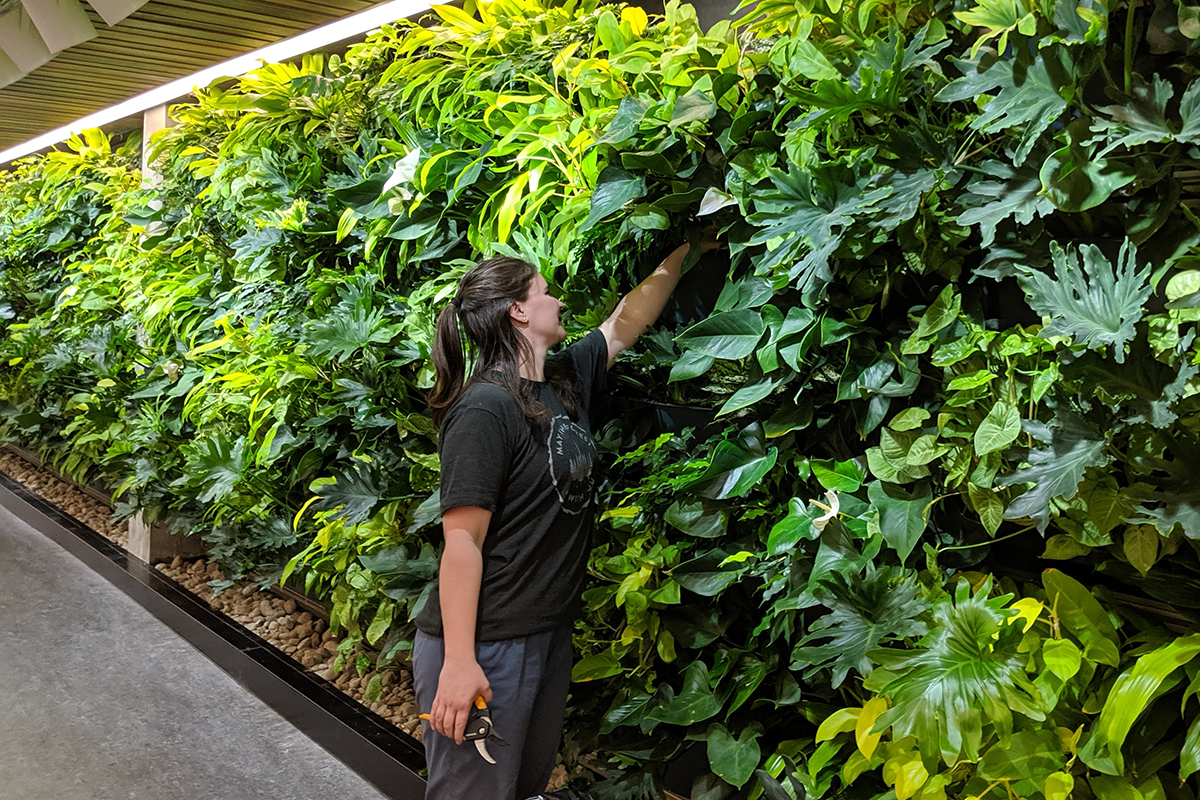
Central Michigan University installed two LiveWalls® in its Biosciences Building. The $95 million, 169,000-square-foot facility opened in 2017 to support student and faculty research. A key feature of the building’s design is its commitment to sustainability and student well-being, highlighted by its two LiveWall® systems.
One of two LiveWalls® installed in the Biosciences Building at Central Michigan University.
Biophilia is gaining acceptance in the design industry. The WELL building standard certifies built environments that support human health and wellbeing.
Enhancing Health, Comfort, and Indoor Air Quality
Living walls contribute directly to healthier indoor environments. Plants naturally increase oxygen levels while reducing carbon dioxide and filtering harmful airborne pollutants such as formaldehyde and carbon monoxide.
Through evapotranspiration, plants release moisture into the air, helping cool spaces in warmer months and restoring healthy humidity during winter. This improved air balance can reduce allergies, irritation, and susceptibility to colds and flu.
The LiveWall® installation at Cornerstone University’s Jack and Mary De Witt Center for Science and Technology serves as a passive biofiltration within the building. The LiveWall® structural components were installed in front of a metal screen that covers the building’s main cold air return. As indoor air returns to the HVAC system, the living material of the plants and growing medium filters the air and biologically degrades air pollutants.

Installed on two levels, the LiveWall® in the Center for Science and Technology at Cornerstone University provides passive biofiltration along with natural beauty.
In addition, the combination of plants, soil, and trapped air acts as a natural sound buffer, reducing noise levels—an especially valuable benefit in busy schools or facilities near traffic, trains, or industrial areas.
Strengthening School Identity and Community Perception
Living walls make a strong visual statement. They communicate that an institution values health, sustainability, and community wellbeing. As “living signage,” they are eye-catching, memorable, and powerful branding tools for schools competing to attract students, staff, and partners.
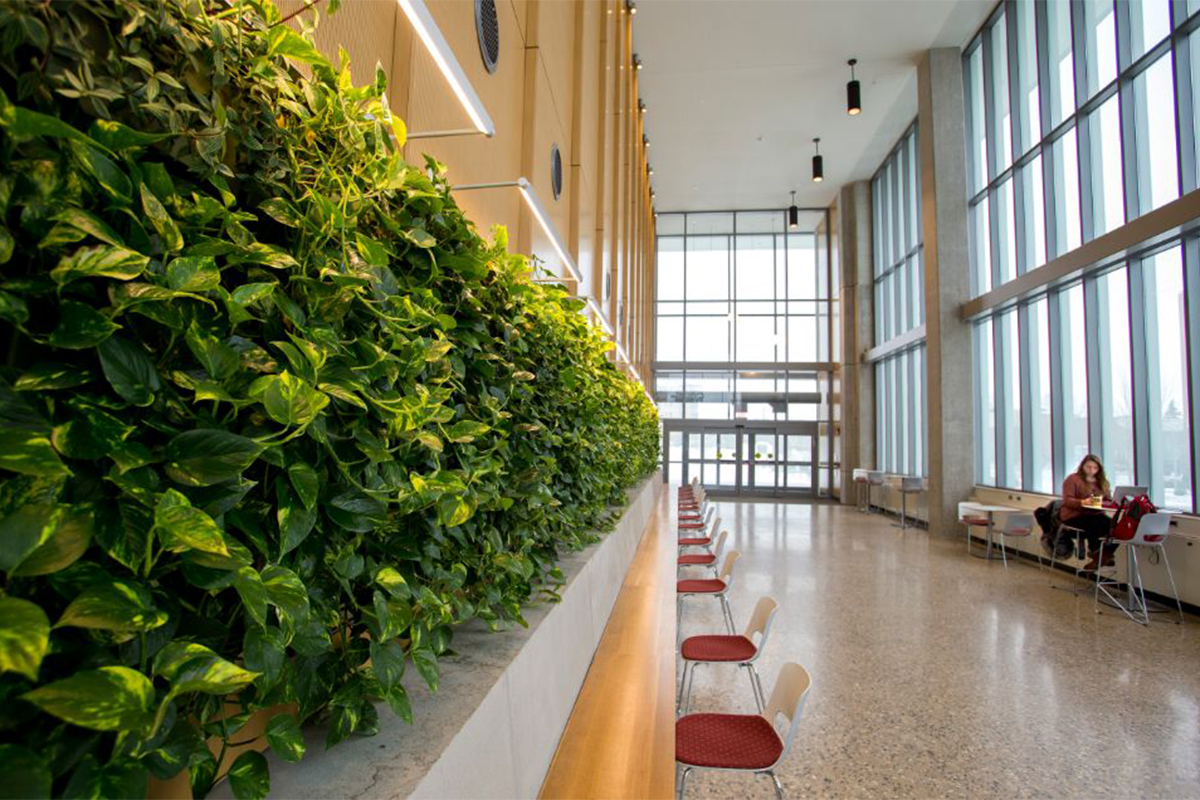
Bata Library at Trent University features a 278-square-foot LiveWall® installed in the atrium. Constructed in 1967, the Bata Library is a prominent landmark on Trent University’s Peterborough campus, and was designed by architect Ronald Thom (1923-1986), the celebrated pioneer of modern Canadian architecture. A transformation project completed in 2018, planned and guided by the Toronto studio of Perkins + Will, transformed the building into a true library of the future.
Recessed between existing concrete pillars in the library’s atrium, the LiveWall® in the Bata Library at Trent University connects two adjacent seating areas to create an inviting open space.
“Thom wanted excellent design that harmonizes with natural settings and natural beauty,” said Dr. Leo Groarke, Ph.D., president and vice-chancellor, Trent University. “Featuring a living wall in the re-design of the Bata Library is a wonderful way to honor this legacy.”
Beyond marketing, green features foster a sense of pride and belonging. Communities that include visible green infrastructure often experience higher levels of trust and engagement, along with reductions in vandalism and littering.
Other Benefits that Living Walls Provide for Higher Education
Living walls can also be used to conceal unsightly equipment or utilities, transforming functional necessities into attractive focal points that enhance the overall aesthetic of a campus. They allow for artistic expression using plants as a living medium. Different colors and plant combinations can influence mood. Warm tones can create comfort, cool greens and blues promote calm, and high-contrast designs can energize a space.
From an environmental perspective, living walls help restore habitat for insects and birds, protect building surfaces from UV exposure and temperature extremes, and reduce urban heat island effects. When installed outdoors, they can even lower cooling demands on buildings, contributing to long-term energy savings and sustainability targets. In some municipalities, green walls may also help institutions meet zoning requirements or qualify for incentives related to green space.

A LiveWall® like this one planted with vegetables and herbs can provide an abundance of fresh produce for culinary students or campus food services.
Living walls can also be productive. When planted with herbs and greens, they can yield fresh, nutritious food right on campus. Students who participate in growing food are more likely to make healthier dietary choices and develop a stronger connection to what they eat. Freshly harvested produce offers peak flavor and nutritional value and can be implemented into student food services.
For educational facilities, living walls are an investment that pays dividends across academics, health, sustainability, and community engagement. They create spaces that don’t just look better, but actively support how people learn, teach, and thrive.
Learn more about the benefits LiveWall® can bring to your educational facilities!
Would Your Team be Interested in a Virtual Educational Session about LiveWall®?
Add “Educational Session” to the Subject line.