
Living Walls in Healthcare: Better Air Quality, Noise Reduction, and Comfort
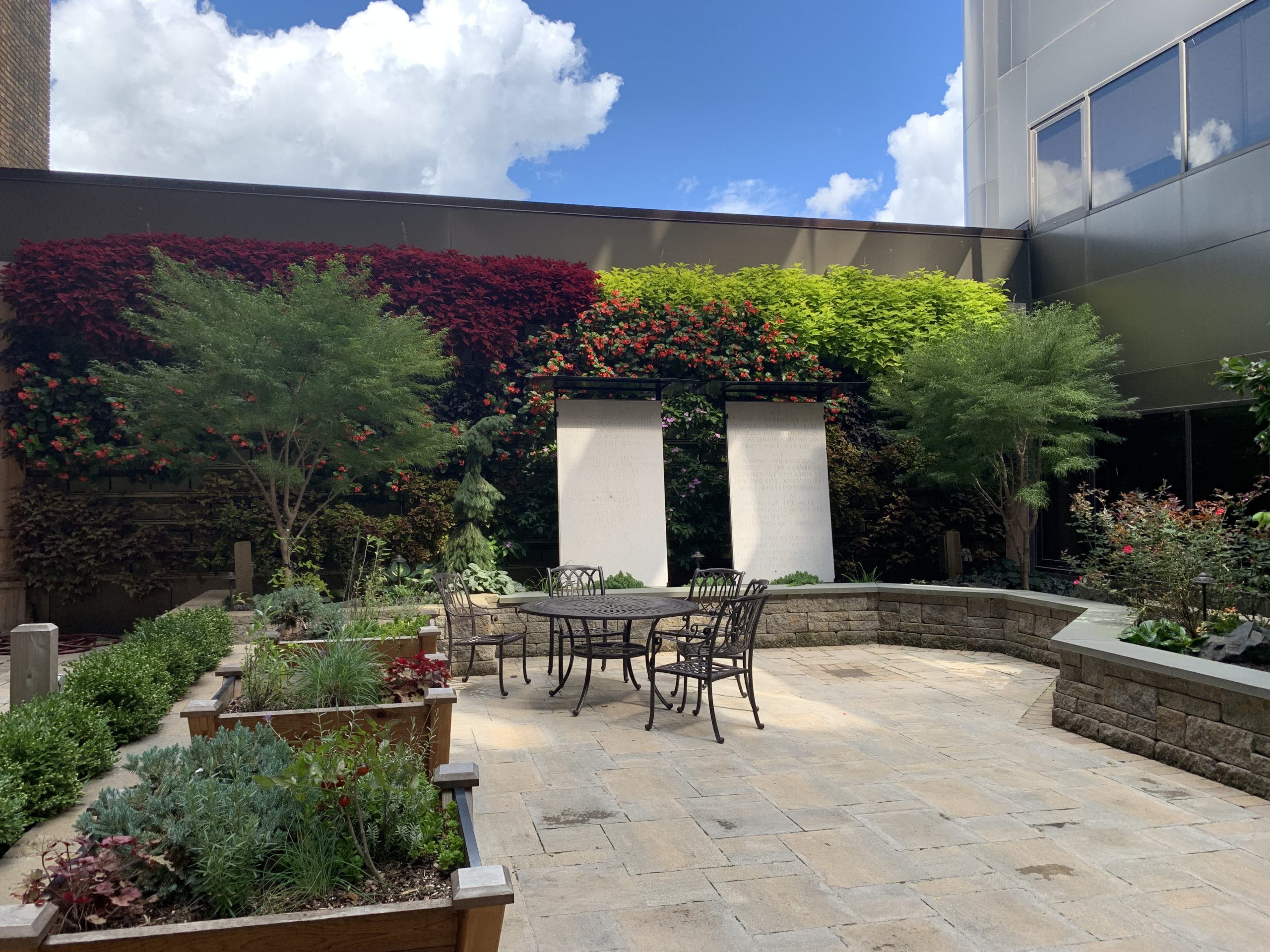
Healthcare facilities are complex environments where comfort, air quality, and noise levels can have a significant impact on the patient experience. While hospitals are designed to support clinical care, they must also provide spaces where patients, visitors, and staff can feel comfortable and at ease.
Living walls offer a natural way to improve the environmental quality of healthcare spaces. By integrating plants into vertical architectural surfaces, these systems introduce greenery that enhances both the atmosphere and functionality of indoor and outdoor areas.
From courtyards to waiting areas, living walls help healthcare facilities create environments that feel calmer, healthier, and more welcoming.
Improving Environmental Comfort in Healthcare Spaces
Hospitals are often busy, high-traffic environments. Patients may be navigating long hallways, waiting areas, or treatment spaces that can feel overwhelming or impersonal. Designers are increasingly looking for ways to improve comfort within these settings.
Plants play an important role in this effort. Living plants naturally release oxygen and help improve air quality by reducing carbon dioxide and trace airborne pollutants.
They also contribute to healthier humidity levels through evapotranspiration, the natural process by which plants release water vapor into the air. This can help balance indoor air conditions and improve comfort in spaces that may otherwise feel dry or sterile.
In addition to air quality benefits, plants also help reduce noise. The combination of leaves, soil, and air trapped within planting systems helps absorb sound, which can soften the acoustics of busy environments.
These environmental benefits make living walls particularly valuable in healthcare settings where comfort and calm are important for both patients and staff.
Case Study: Sharp Coronado Hospital Courtyard
A strong example of these benefits can be seen at Sharp Coronado Hospital in Coronado.
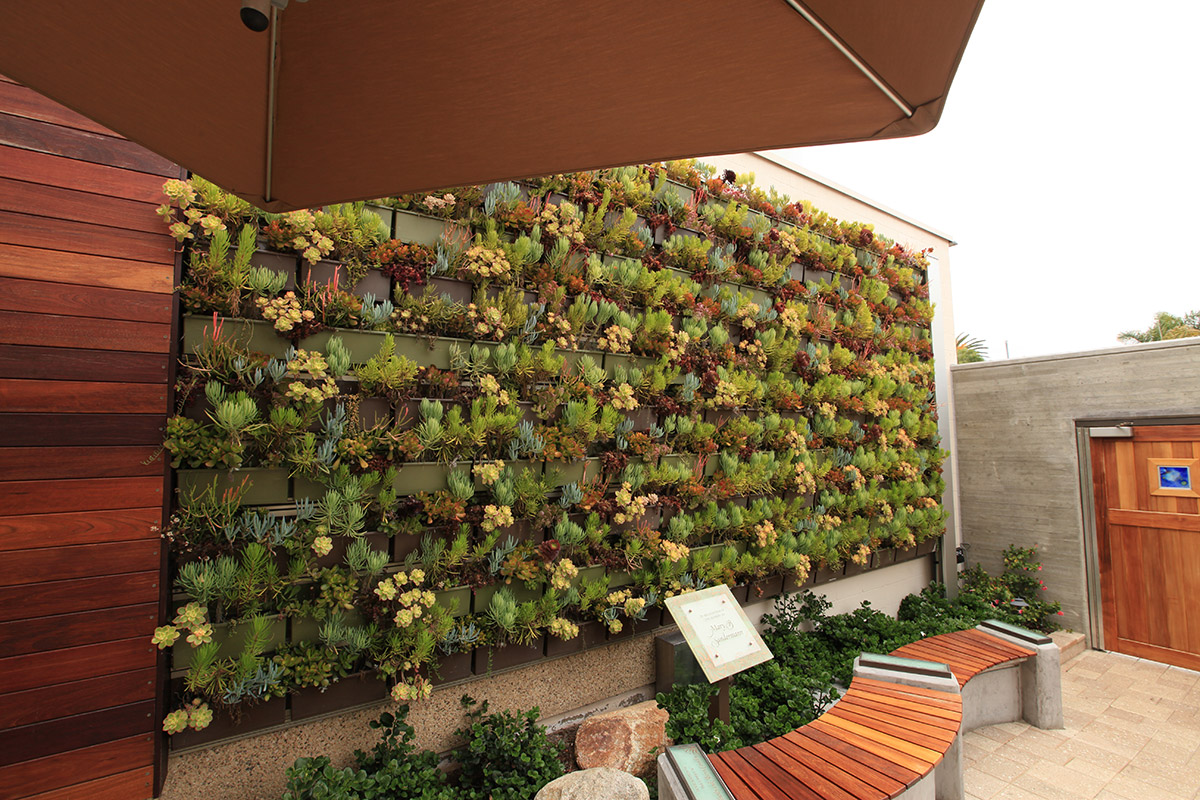
Installed in 2015, the LiveWall system in the hospital’s healing garden measures approximately 18 feet by 10 feet, adding a lush vertical landscape to the outdoor space. The LiveWall features planters in alternating colors planted with succulents that reflect vegetation typical of local landscapes.
Courtyards often serve as important gathering areas within healthcare campuses, providing places where patients, visitors, and staff can spend time outdoors. At Sharp Coronado Hospital, the living wall transforms the courtyard into a vibrant garden environment.
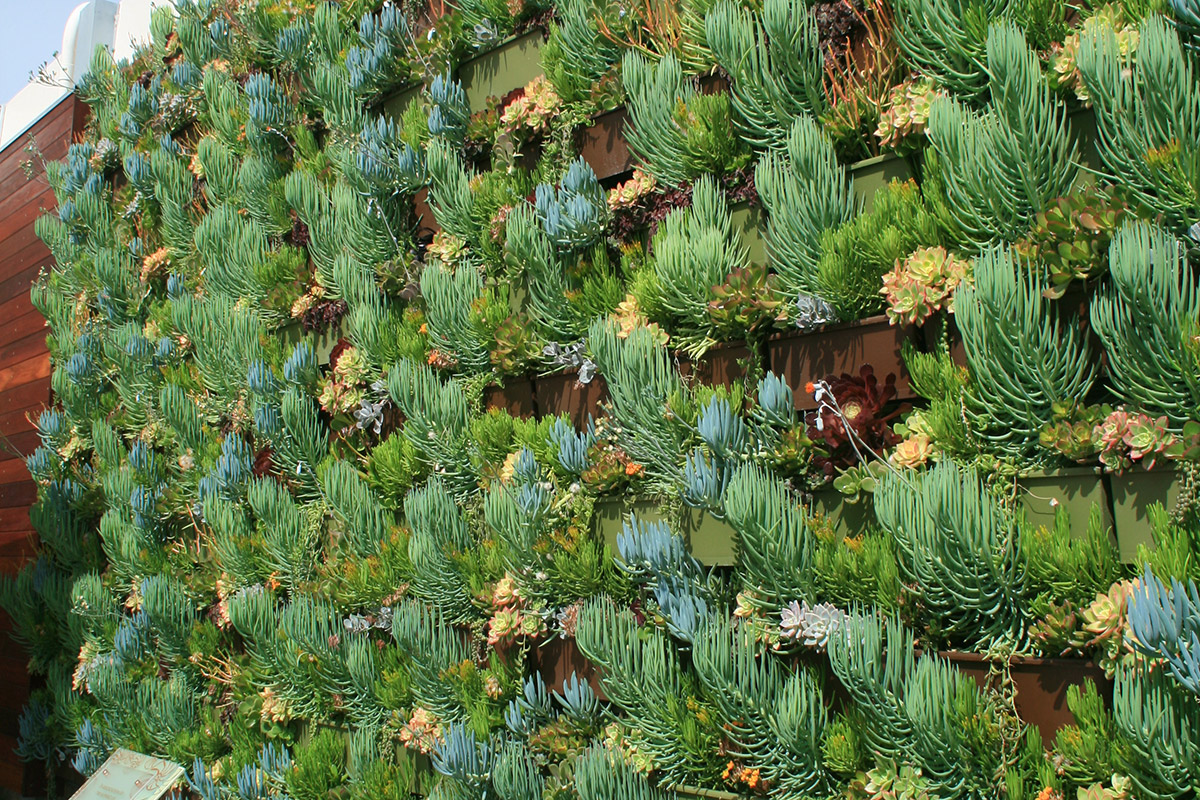
Vertical greenery introduces natural color and texture while helping create a quieter, more relaxing space. Patients and visitors can step outside and experience a setting that feels noticeably different from the interior hospital environment.
By integrating plants directly into the architecture of the courtyard, the living wall helps reinforce the space as a restorative area where people can take a break, get fresh air, and recharge.
Courtyard Installation at Corewell Health Blodgett Hospital
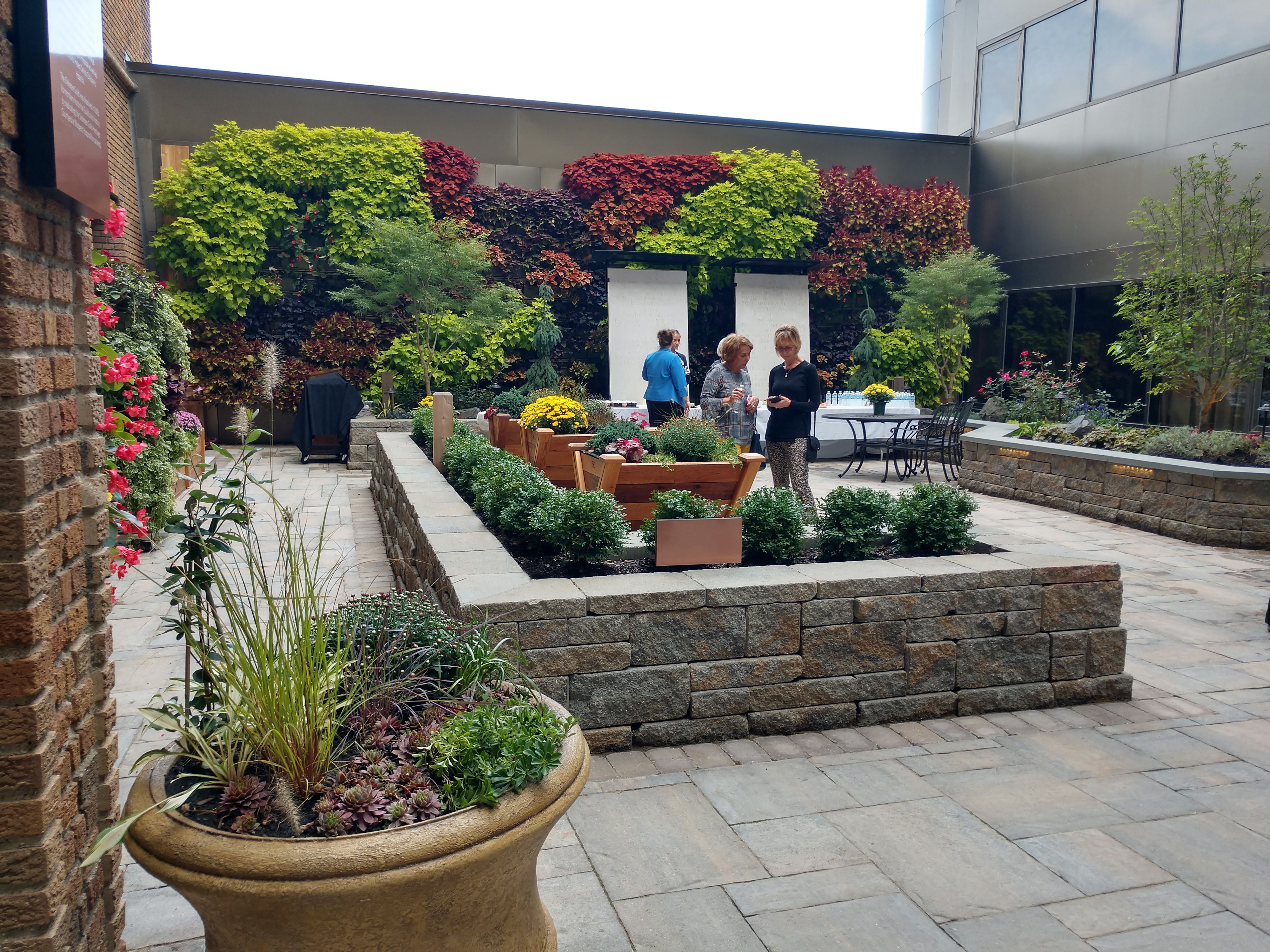
Another example of living walls improving outdoor healthcare environments can be found at Corewell Health Blodgett Hospital in Grand Rapids.
Installed in 2023, the LiveWall installation in the hospital courtyard measures approximately 17 feet wide by 10 feet tall.
Like many healthcare courtyards, this space is designed to provide a peaceful outdoor setting where people can step away from the activity of the hospital. The living wall adds vertical greenery that enhances the atmosphere of the courtyard and creates a more immersive garden experience.
The result is a space that feels greener, quieter, and more inviting for patients, visitors, and healthcare staff.

Conclusion
Environmental comfort plays an important role in how healthcare facilities are experienced. Improving air quality, reducing noise, and creating welcoming spaces can make a meaningful difference for patients and the people who care for them.
Living walls offer a natural way to enhance these environments. By introducing plants into courtyards and other shared spaces, healthcare facilities can create healthier, more comfortable settings that support well-being throughout the campus.
Interested in a Living Wall for a Healthcare Environment?
Would you like to receive a budgetary estimate for your project?
Would Your Team be Interested in a Virtual Educational Session about LiveWall®?
Add “Educational Session” to the Subject line.