
Designing Better Infrastructure: The Benefits of Living Walls
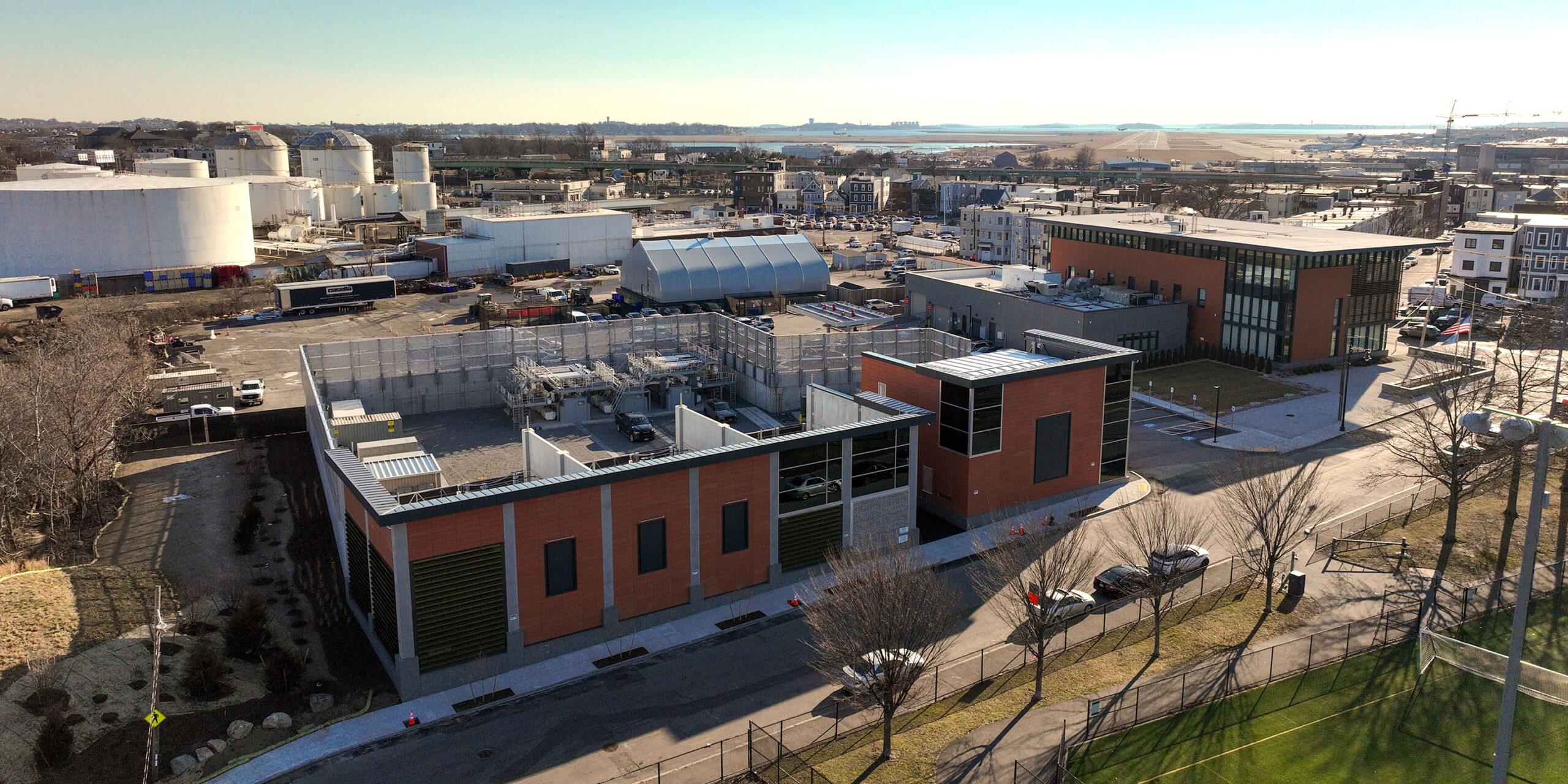
The Eversource East Eagle Substation, before plants were added to the project’s LiveWalls.
Infrastructure projects are essential to modern communities, but integrating utility facilities into established neighborhoods can present design and green space challenges. Living walls offer one way to bring nature into these built environments, adding greenery and visual interest while creating opportunities for broader environmental benefits.
The Eversource East Eagle Substation in East Boston, Massachusetts, offers a compelling example of how living walls can become part of an infrastructure project’s exterior design.
Bringing Green Space into Built Environments
In urban areas, opportunities to add green space can be limited. Buildings, roads, sidewalks, fences, and utility facilities occupy valuable land, leaving less room for traditional landscaping. Living walls make use of vertical surfaces, introducing green space without requiring additional ground space.
At the East Eagle Substation, four LiveWalls transform portions of the facility’s exterior into planted surfaces. Installed in June 2026 by D. Muzzioli Associates, the walls bring greenery directly into a dense urban setting.
The planting combines perennials—including Allium, Bergenia, Geranium, Calamagrostis, and Heuchera—with annuals such as Coleus, Impatiens, and Citronella. This mix creates variation in foliage, texture, and seasonal color, bringing nature into an otherwise highly developed environment.
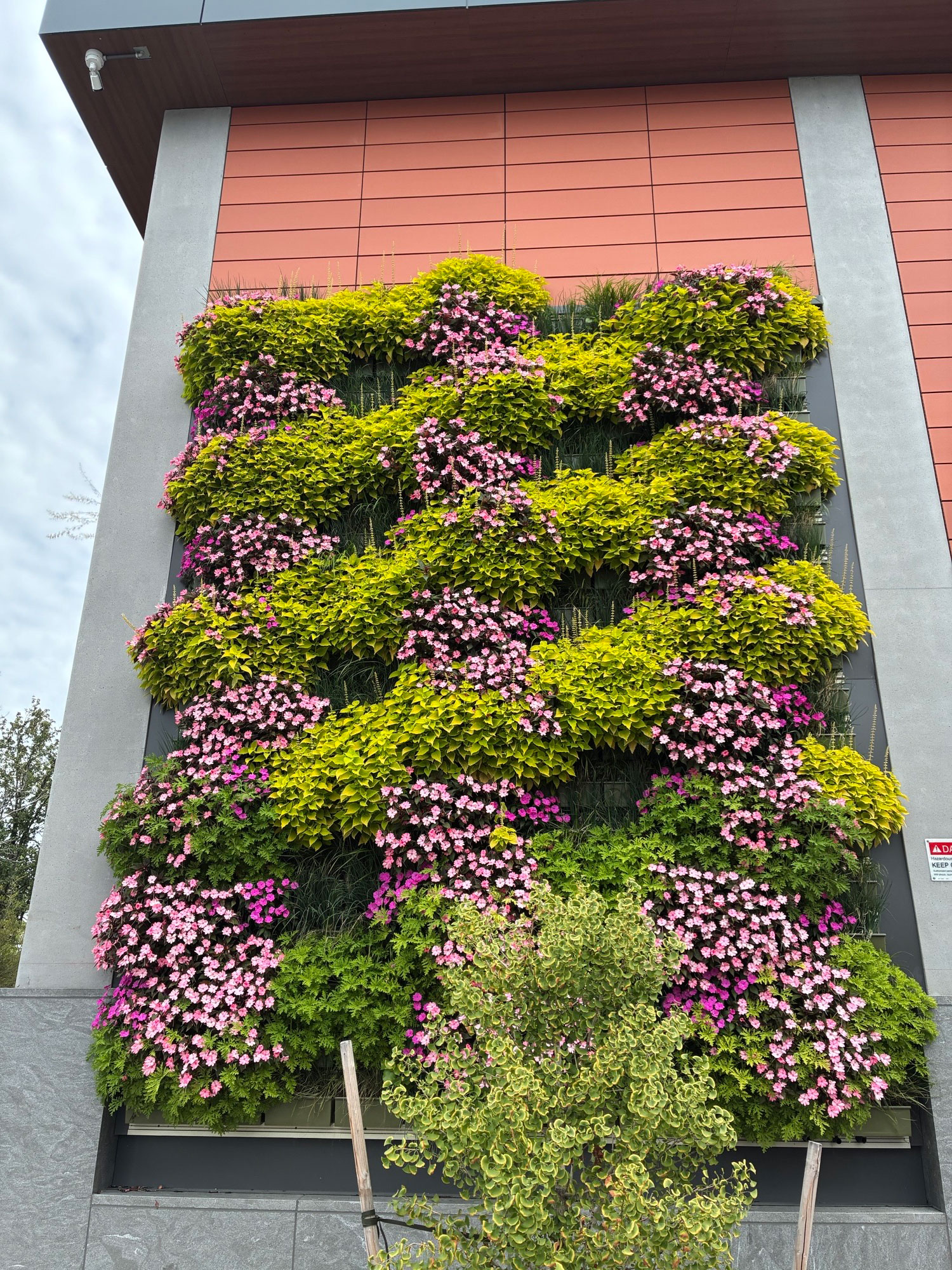
One of the West-facing LiveWalls, planted with annuals and perennials, such as Coleus, Impatiens, Citronella, Allium, and Calamagrostis.
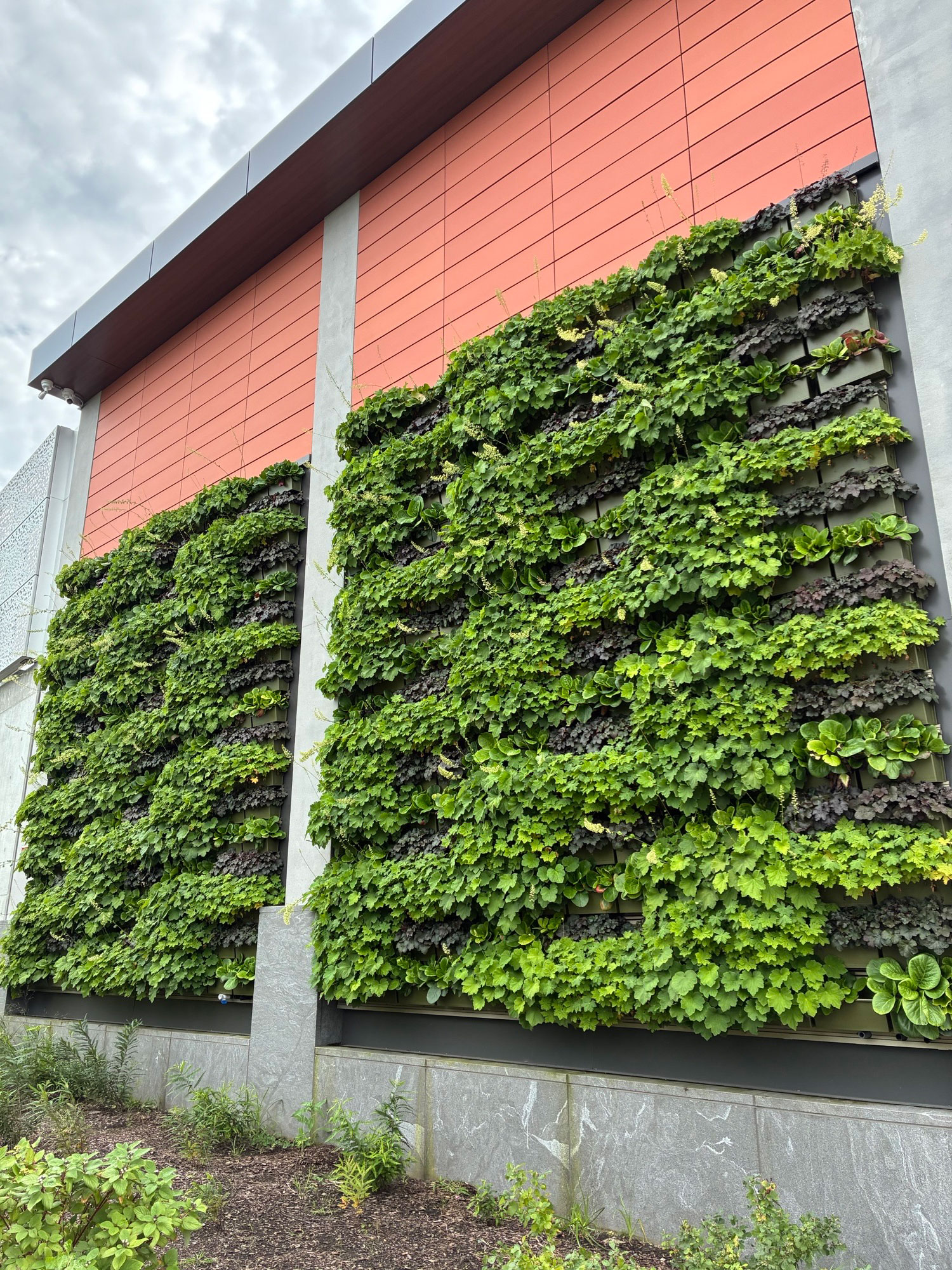
Perennials planted on the North-facing LiveWalls, including Bergenia, Geranium, and Heuchera.
Supporting Urban Habitat and Biodiversity
The East Eagle planting illustrates how infrastructure projects can incorporate a variety of plants into the built environment. And the ecological value of a particular wall will depend on its plant palette and surrounding habitat. For example, plants that attract pollinators or create habitat for bird life help to support the biodiversity of an urban setting.
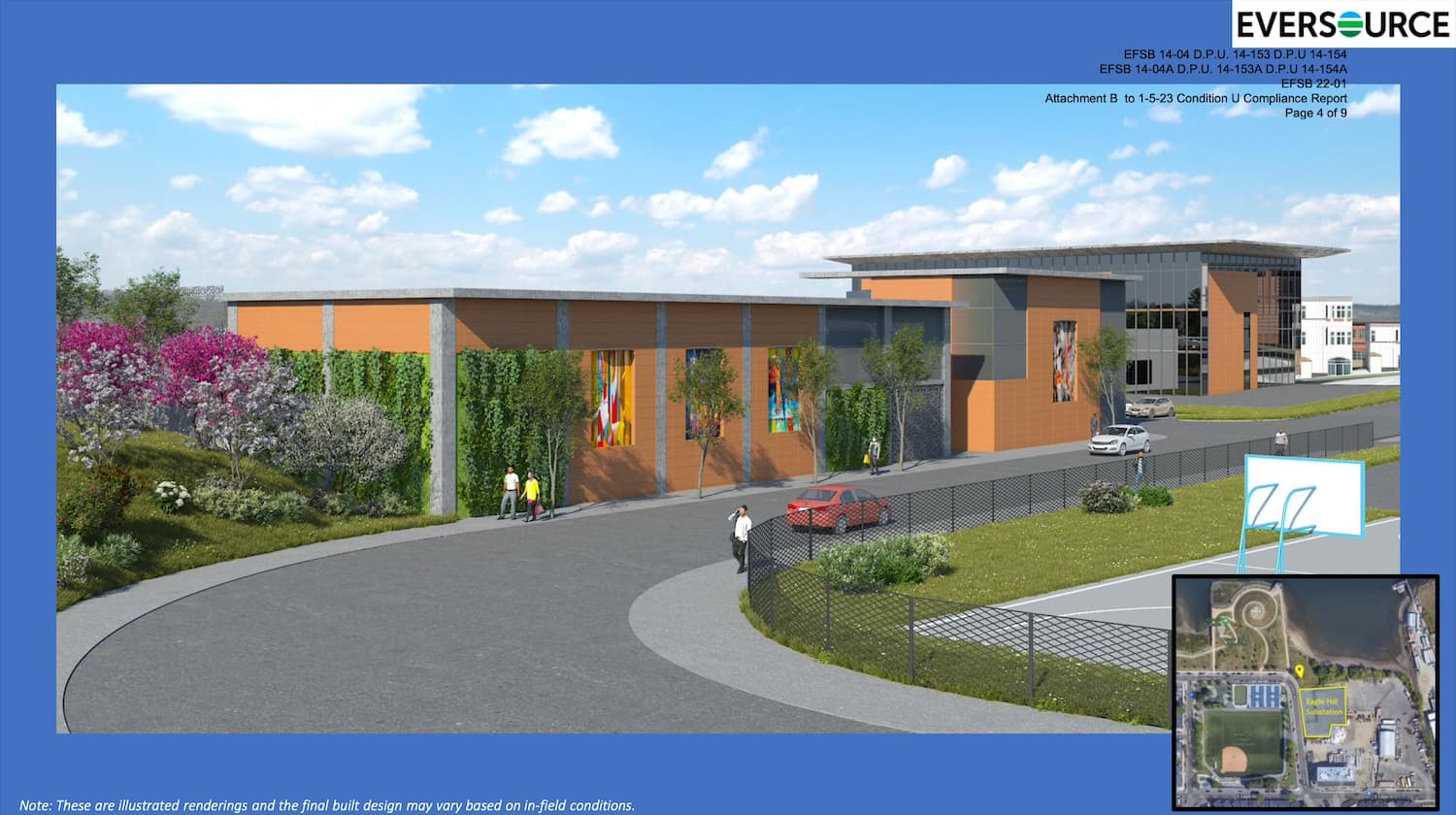
Rendering of the Eversource East Eagle Substation showing LiveWalls and art installations on the facade of the structure.
Improving the Appearance of Infrastructure
Large utility buildings often feature expanses of metal, concrete, stone, and other hard materials. Living walls introduce a contrasting layer of greenery that can soften these surfaces and help a facility relate more thoughtfully to its surroundings.
At East Eagle, leafy plants, ornamental grasses, and bright pink flowers create a distinctive visual display against the building’s gray stone and warm-toned exterior panels. The planting adds depth, color, and texture while complementing the architecture.
The façade design also involved community input. As a condition of the Massachusetts Energy Facilities Siting Board’s approval of the substation project, the perimeter façade design was required to include community participation. A focus group that included community members reviewed concepts proposed by the architect and selected the design that incorporated a LiveWall.
Eversource has since received anecdotal feedback that neighbors are enjoying the greenery and blooms. While informal, this feedback offers an encouraging example of how incorporating nature into infrastructure design can add visual interest to a facility and its surrounding community.
Reducing Noise in Built Environments
Infrastructure facilities often operate near homes, businesses, and busy streets, where mechanical equipment and urban activity can contribute to unwanted noise. LiveWall helps address these challenges through the combined sound-absorbing and sound-diffusing properties of plant foliage, growing media, and the wall structure, helping reduce sound reflections and creating more comfortable surroundings.
For infrastructure projects, LiveWall offers the additional benefit of noise attenuation alongside living greenery and visual appeal. At the East Eagle Substation, the LiveWalls are part of a community-informed façade design that demonstrates how infrastructure can incorporate natural elements while addressing multiple design considerations, including the reduction of surrounding noise.
Making Room for Nature in Infrastructure Design
Infrastructure must perform its essential function, but its design can also consider the surrounding community and environment. Living walls introduce green space, enhance visual appeal, and create opportunities for urban habitat on buildings that might otherwise have little connection to nature.
At East Eagle, the contrast between the substation’s hard architectural surfaces and the LiveWalls’ lush foliage and colorful blooms illustrates what this approach can look like in practice. Selected through a community-involved design process, the living walls bring a visible element of nature to an essential utility facility—and show how infrastructure can serve its purpose while making room for greenery in the surrounding neighborhood.