
Living Walls in the Workplace: Supporting Employee Well-Being and Productivity

People spend a significant portion of their day at work, making the workplace environment an important part of the employee experience. While office design often prioritizes functionality, lighting, and technology, incorporating nature can also help create a more welcoming and engaging place to work. Living walls offer a striking way to bring plants indoors, connecting people with nature while adding visual interest to the spaces where they spend their days.
Bringing Nature into the Workplace
Modern offices can include expansive windows and comfortable furnishings yet still feel disconnected from the natural world. Living walls help bridge that gap by introducing lush greenery directly into the built environment.
Unlike a few individual potted plants, a living wall creates a substantial planted feature that can transform an ordinary wall into a focal point. Installed in reception areas, collaborative spaces, or open office environments, a LiveWall® can soften hard architectural surfaces and make interior spaces feel more inviting.
This approach, known as biophilic design, incorporates natural elements into buildings to strengthen people’s connection with nature. Research suggests that nature exposure in the workplace may help support employee well-being and restore mental resources. A 2023 systematic review by Gonçalves and colleagues examined research on nature exposure during working hours, including indoor plants and other natural elements. The review found promising evidence of restorative benefits, while noting that more research is needed to better understand these effects. Although the findings do not establish that a living wall directly improves productivity, they support considering nature as part of a thoughtfully designed workplace. [1]
Creating an Environment That Supports Focus
Many workplace tasks require sustained attention, concentration, and accuracy. Long periods spent looking at screens and working through demanding tasks can contribute to mental fatigue. Incorporating plants into the workplace offers employees a visual connection to nature throughout the day, providing a welcome contrast to screens, equipment, and other features of the modern office.
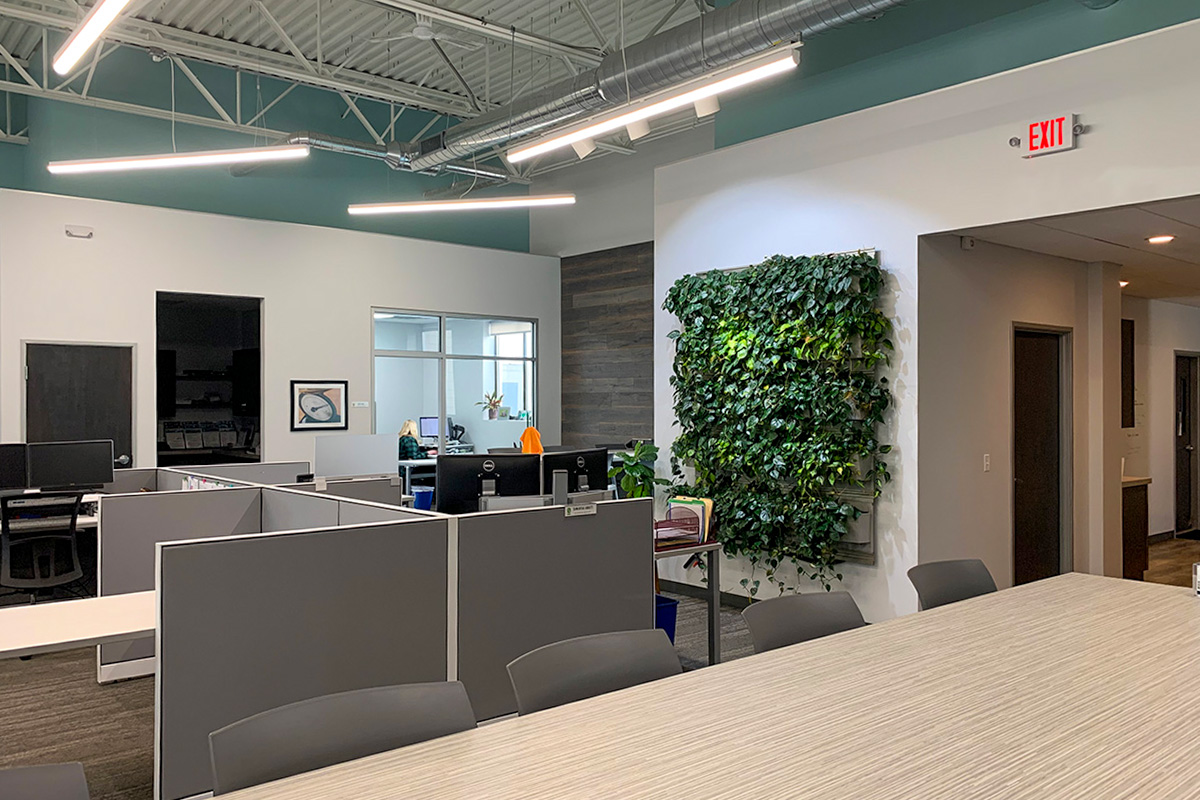
Grand Rapids Metrology offers an example of how living walls can be integrated into a professional work environment. Its indoor LiveWall® features lush pothos in various shades of green, bringing natural texture and color into the office. For a business where precision is essential, the installation demonstrates how a living wall can become part of a thoughtfully designed workplace.
Although a living wall alone cannot guarantee improved productivity, incorporating natural elements is one way organizations can create work environments that consider employee well-being alongside performance.
Reducing Noise for a More Comfortable Workplace
Noise is another factor that can affect the workplace experience. Conversations, office equipment, and activity in shared spaces can create a distracting environment, particularly in open-plan offices with hard floors, ceilings, and walls that reflect sound.
Living walls can help improve indoor acoustics by absorbing some sound energy and reducing sound reflections. The plants, growing medium, and structure of the wall all contribute to its acoustic performance. By combining greenery with sound absorption, a LiveWall® can contribute to a more comfortable interior environment while serving as an attractive architectural feature. For workplaces looking to address both aesthetics and acoustics, a living wall offers an opportunity to integrate these considerations into a single design element.

Making a Positive First Impression
The workplace experience extends beyond employees. Reception areas and shared spaces welcome clients, business partners, and visitors, making their design an important reflection of an organization’s identity.
At Applied Innovation‘s corporate headquarters in Grand Rapids, Michigan, a 198-square-foot LiveWall® serves as a prominent design feature in the lobby. Measuring 9 feet tall and 22 feet long, the wall incorporates 98 LiveWall® large planters filled with tropical plants selected for indoor growing. The plant palette includes striped dracaena (Dracaena warneckii ‘Green Stripe’ and Dracaena fragrans ‘Lemon Lime’), Swiss cheese plant (Monstera deliciosa), fiddle-leaf fig (Ficus lyrata), burgundy rubber plant (Ficus elastica ‘Burgundy’), and tree philodendron (Philodendron selloum).
The lush greenery is paired with colorful signs representing the company’s elements for success, including knowledge, integrity, and humility. By combining living plants with meaningful company messaging, the installation creates a distinctive architectural feature that brings the organization’s values into the visitor experience.
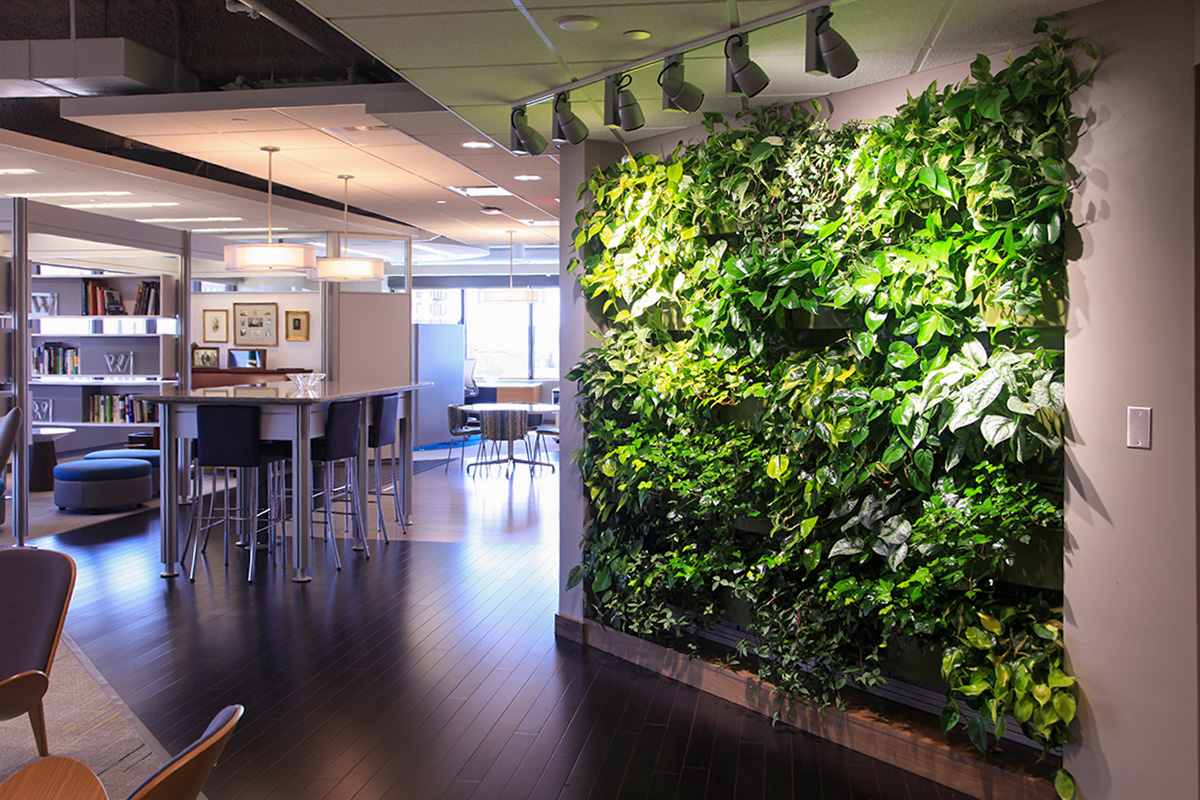
The Wege Foundation‘s Grand Rapids office offers another example of how a living wall can contribute to a welcoming workplace. Its indoor LiveWall® brings greenery into the organization’s interior environment, connecting staff and visitors with nature while complementing the foundation’s mission.
Together, these projects illustrate how living walls can serve both practical and aesthetic purposes. Beyond decorating an interior, they can help create memorable spaces that welcome visitors, enrich the workplace experience, and reflect an organization’s identity.
Investing in a Better Workplace Experience
Creating a supportive work environment involves many considerations, from lighting and acoustics to comfortable furnishings and access to natural elements. Living walls offer another opportunity to make workplaces more connected to nature.
Whether installed in an office, conference area, or reception space, a LiveWall® combines lush plantings with architectural design. It introduces greenery where employees spend their days, creates a distinctive visual feature, and can contribute to improved acoustic comfort.
By bringing nature into the workplace, organizations can look beyond functionality alone and create environments designed with the people who use them in mind.