
How Living Walls Improve Patient Recovery in Healthcare Facilities

A Heart-shaped arrangement of flowering annuals fills the LiveWall at Hendricks Regional Health in Danville, IN.
Healthcare facilities today are designed with more than clinical efficiency in mind. Increasingly, hospitals and medical centers are focusing on environments that help reduce stress, improve comfort, and support the healing process.
One design strategy gaining momentum in healthcare architecture is the use of living walls. These vertical gardens integrate plants directly into architectural surfaces, transforming courtyards, entrances, and outdoor spaces into vibrant environments that connect people with nature. By introducing greenery into healthcare settings, living walls help create welcoming spaces for patients, visitors, and healthcare staff.
The Importance of Healing Environments
Hospitals can be stressful places. Patients and families are often navigating illness, uncertainty, and emotional strain. Thoughtful design can help ease these experiences by creating environments that promote calm and comfort.
This approach is often referred to as biophilic design, which incorporates natural elements into built environments. Plants play an important role in this strategy, helping soften architectural spaces and creating a stronger connection to nature.
In healthcare settings, access to planted environments can encourage patients, visitors, and staff to spend time outdoors, providing moments of relaxation during what may otherwise be a difficult experience. Living walls make this possible, even where space is limited, by using vertical surfaces to introduce lush greenery.

Brightly colored annuals bring cheer to those using the healing gardens at Hendricks Regional Health.
How Living Walls Support Recovery
Living walls contribute to healing environments in several ways. First, they provide a visual connection to nature. For patients who may spend extended periods indoors, views of greenery can help create a more pleasant and calming atmosphere.
Living walls also enhance outdoor areas such as courtyards and therapy gardens, making them more inviting places for patients and families to spend time. These spaces allow people to step away from clinical surroundings and experience the restorative qualities of nature.
Plants also contribute to healthier environments by naturally increasing oxygen levels and helping improve air quality by reducing carbon dioxide and trace airborne pollutants.
Interaction with plants may also support recovery. Patients who engage with planted environments have been shown to use less medication and experience reduced recovery times after medical procedures.
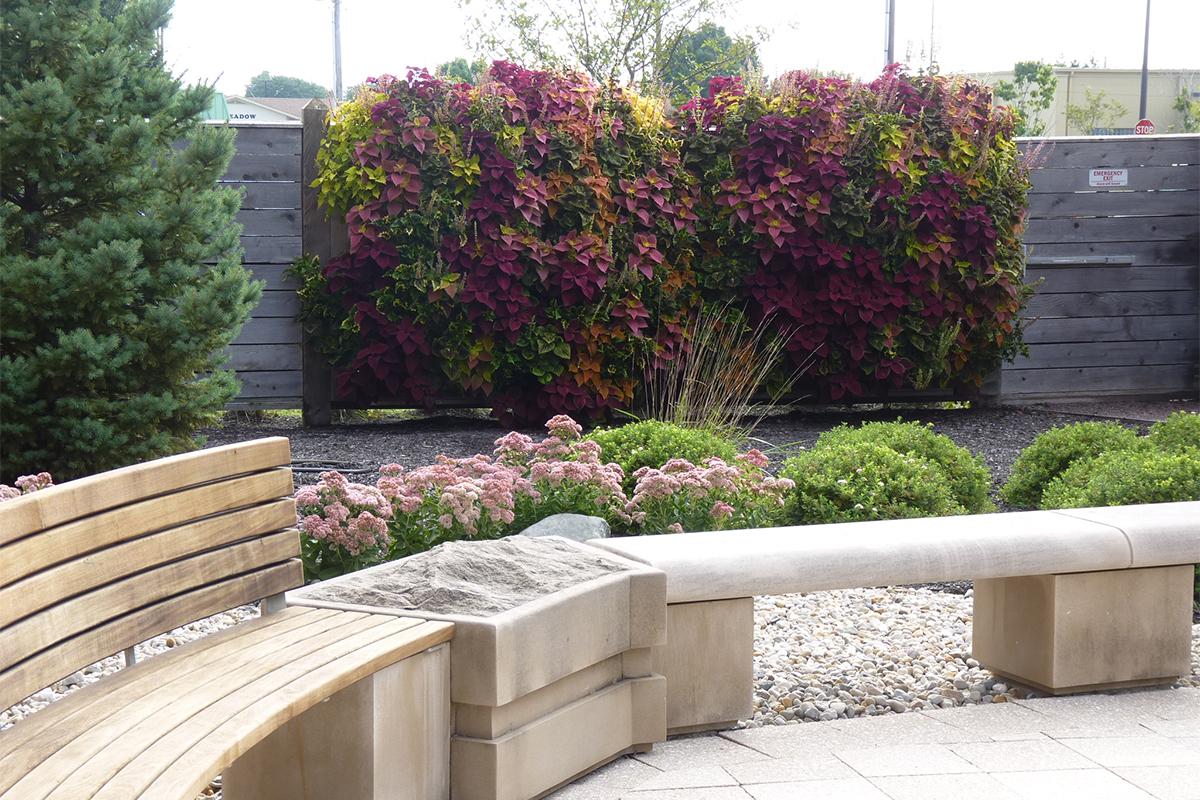
LiveWall installations at Hendricks Regional Health.
Hendricks Regional Health Healing Garden
A strong example of living walls supporting a healing environment can be found at Hendricks Regional Health in Danville, IN.
As part of the hospital’s healing garden, four LiveWall installations were incorporated into the courtyard and patio fence areas surrounding the space. Installed in 2015, these planted walls help transform the courtyard into a welcoming retreat for patients, visitors, and staff.
Vertical gardens add texture, color, and seasonal variation to the space while helping create a more immersive garden environment. Surrounded by greenery, the courtyard becomes a peaceful place where people can relax and reconnect with nature.

Colorful annuals in full bloom on the double-sided LiveWall at Mary Free Bed’s Therapy Garden.
Therapy Garden Entrance at Mary Free Bed Rehabilitation Hospital
Another example can be found at Mary Free Bed Rehabilitation Hospital in Grand Rapids, MI.
Installed in 2023, a 146-square-foot double-sided LiveWall marks the entrance to the hospital’s therapy garden.
Rehabilitation hospitals place a strong emphasis on environments that support both physical and emotional recovery. The living wall creates a welcoming transition into the outdoor therapy space, helping reinforce the garden as a restorative environment for patients and visitors.

Patients at Mary Free Bed enjoy the therapeutic benefits of living plants in the Therapy Garden.
Bringing Nature Into Healthcare Spaces
Healthcare facilities increasingly recognize that the environments they create can influence how patients feel and recover. Integrating natural elements such as plants helps transform clinical spaces into environments that feel more supportive and restorative.
Projects like the healing garden at Hendricks Regional Health and the therapy garden entrance at Mary Free Bed Rehabilitation Hospital demonstrate how living walls can enhance healthcare environments. By bringing living plants into the built environment, vertical gardens help create calming spaces that support well-being and patient-centered care.
Learn more about the Health and Well-Being benefits that LiveWall provides.
Would you like to receive a budgetary estimate for your project?
Would Your Team be Interested in a Virtual Educational Session about LiveWall®?
Add “Educational Session” to the Subject line.